

Why The AAP Updated Its Recommendations
For many families, finding the cause of developmental delays can take years. Children may undergo multiple tests, specialist visits, and procedures before reaching a diagnosis.
The AAP’s updated guidance recognizes that earlier use of genomic sequencing can significantly improve the diagnostic process.
Compared with traditional genetic testing approaches such as chromosomal microarray (CMA) or single-gene testing, exome and genome sequencing evaluate thousands of genes at once, making it easier to identify the underlying genetic cause of complex conditions.
Research cited by the AAP shows that genomic sequencing has at least twice the diagnostic yield of chromosomal microarray for children with developmental delay or intellectual disability.
Earlier diagnosis can also help:
- Guide treatment decisions
- Avoid unnecessary procedures
- Inform prognosis and long-term care
- Support family planning
What The AAP Recommends About Exome and Genome Sequencing
Under the updated guidance, clinicians should consider exome sequencing or genome sequencing as Tier 1 tests when evaluating children with unexplained developmental delay or intellectual disability.
This represents an important shift from older approaches where genomic sequencing was often used only after multiple other tests failed to provide answers.
The AAP guidance also aligns with previous recommendations from the American College of Medical Genetics and Genomics (ACMG) supporting the use of genomic sequencing earlier in the diagnostic process.
Together, these recommendations reflect a growing consensus that genomic testing should play a central role in pediatric diagnostic evaluation.
How Genetic Testing Fits Into The Evaluation Process
Children with global developmental delay or intellectual disability often require a structured diagnostic approach that combines clinical evaluation with genetic testing.
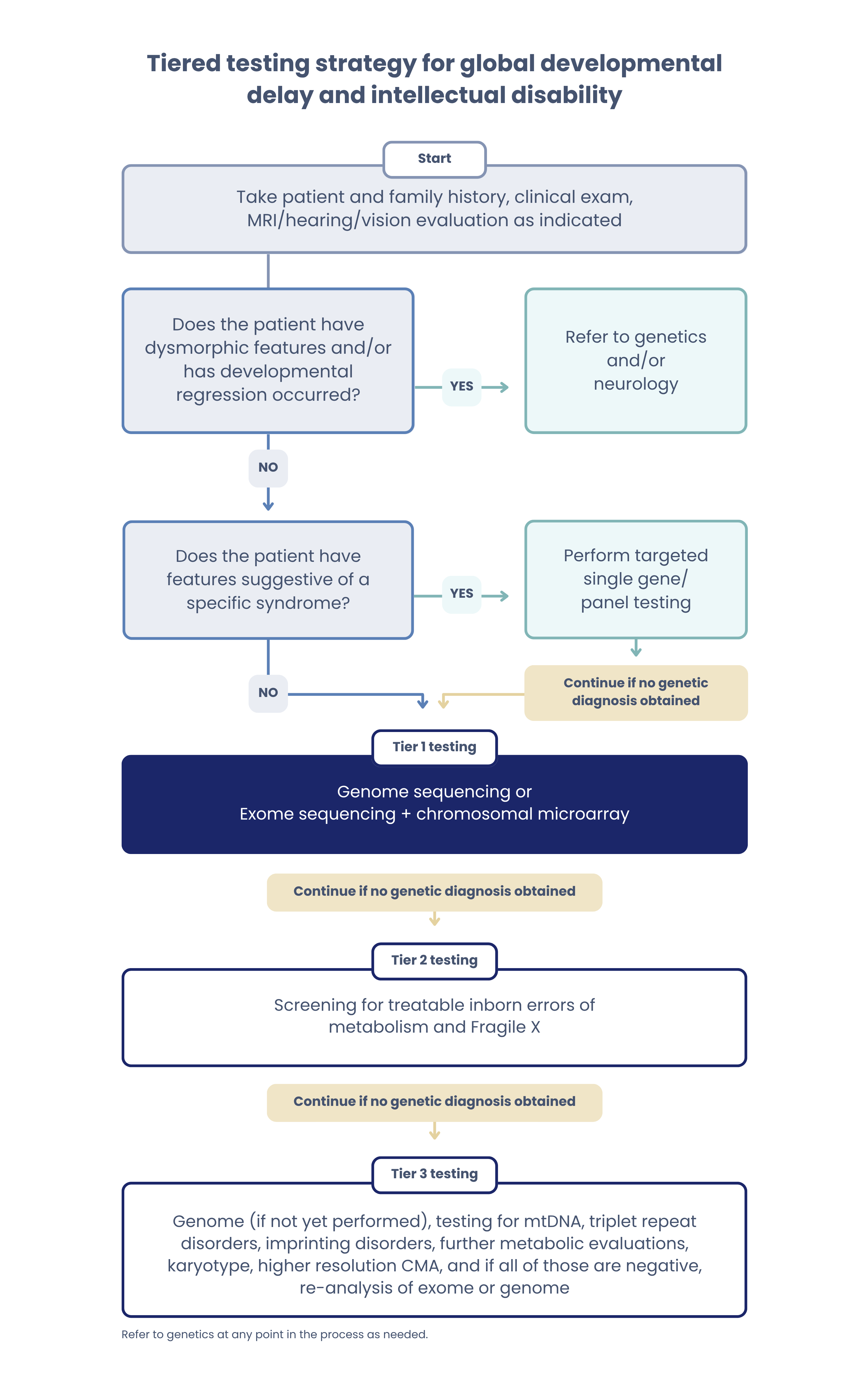
The American Academy of Pediatrics recommends a tiered diagnostic strategy, beginning with clinical assessment and moving to genomic testing when a specific diagnosis is not suspected.
This approach helps clinicians balance targeted testing with comprehensive genomic analysis when needed.
Tiered Testing Strategy for Global Developmental Delay and Intellectual Disability
Who Should Be Evaluated For Genomic Testing
The updated guidance applies to children with unexplained global developmental delay or intellectual disability, even when symptoms appear mild or nonspecific.
Global Developmental Delay (GDD)
GDD refers to significant delays in two or more developmental domains in children under age five. These domains may include:
- Motor development
- Language development
- Cognitive function
- Social or adaptive skills
Examples may include a child who is not pulling to stand by 12 months, not speaking by 18 months, or unable to form short sentences by age four.
Intellectual Disability (ID)
Intellectual disability involves ongoing challenges with learning, reasoning, and everyday adaptive skills. Diagnosis is typically made after age five but may be suspected earlier through developmental assessment.
Because the underlying causes of these conditions are often genetic, broad genomic testing can provide important diagnostic insights.
Why Earlier Genetic Diagnosis Matters
For families, the journey to a diagnosis can be long and uncertain. Delays in identifying the cause of developmental challenges may postpone access to appropriate care, treatments, and support services.
Earlier genomic testing can help clinicians:
- Identify rare genetic conditions sooner
- Tailor care and treatment strategies
- Connect families with specialized care teams
- Provide clarity about prognosis and recurrence risk
In addition to clinical benefits, research suggests that early genomic testing may also reduce healthcare costs by limiting unnecessary testing and referrals. One study found that first-line exome sequencing can save an average of $6,845 per patient compared with traditional diagnostic pathways.
What Pediatricians Should Do Next
The updated AAP guidance encourages clinicians to consider genomic sequencing early when evaluating developmental delay or intellectual disability.
The diagnostic process typically begins with:
- A thorough medical and developmental history
- A detailed family history
- A comprehensive physical examination
When genetic testing is indicated, clinicians may consider exome sequencing or genome sequencing, often alongside chromosomal microarray depending on the clinical presentation.
Providers who feel comfortable ordering testing can do so directly, while others may choose to refer patients to genetics specialists for further evaluation.
GeneDx Is Here To Help
GeneDx has been a leader in pediatric genomic diagnostics for more than two decades, helping clinicians diagnose rare genetic conditions and support families seeking answers.
Our comprehensive genomic testing solutions align with the latest AAP guidance and are designed to help providers:
- Order testing efficiently
- Interpret results with confidence
- Support patient care decisions
Whether you are ordering testing directly or referring a patient to a genetics specialist, our team is here to help every step of the way.
Want help getting started? Contact our team to learn more.