
Newborn screening initiative
Genomic newborn screening for early diagnosis
GeneDx partners with leading genomic newborn screening initiatives, including GUARDIAN, Early Check, NIH’s BEACONS Network, and Florida’s Sunshine Genetics Program.
Through these programs, we are generating real-world evidence to understand how genome sequencing can identify rare genetic conditions earlier and support better outcomes from birth.

What is newborn screening?
Newborn screening is a routine test performed shortly after birth to identify certain serious health conditions. These tests help detect disorders early, often before symptoms appear, so treatment can begin as soon as possible. However, traditional newborn screening does not detect all genetic conditions.

What happens after newborn screening?
Newborn screening is an important first step in identifying certain health conditions early. If a result is positive or unclear, your baby’s healthcare provider may recommend follow-up testing to better understand what it means.
In some cases, additional testing may be needed because not all genetic conditions are included in standard newborn screening. While traditional screening looks for specific biomarkers, it may not detect conditions that do not have known markers.
Genomic testing, such as exome or genome sequencing, can provide a more comprehensive view by analyzing your baby’s DNA. Learn more about exome and genome testing and how it may help identify underlying genetic causes.
Are you a healthcare provider? Explore clinical genome sequencing options.

Ensuring all children have the best chance for a healthy life from birth
By diagnosing children at birth through genome sequencing, it’s possible to start treatment before their symptoms appear.
Before the disease progresses or causes irreversible damage. Before they need to undergo invasive test after test. Before their family spends days and weeks in the hospital, not knowing why—or what the future might hold.
In urgent care settings, such as the NICU (neonatal intensive care unit), rapid genomic testing may help provide answers more quickly.
The current state of newborn screening
Newborn screening in the United States varies from state to state, with federal guidelines recommending testing for 64 conditions. Implemented over 30 years ago, this testing primarily looks for biomarkers, measurable changes in the baby’s blood that indicate the baby may have a disorder.
Yet there are hundreds of disorders that lack biomarkers. Newborns with these conditions are routinely missed by today’s newborn screening, leading to months or years of unexplained symptoms and, in some cases, irreversible harm.

The Journal of the American Medical Association spotlights initial results
- Of the 4,000 newborns screened using GeneDx genome sequencing, 3.7% had a positive screen. The majority of those would not have been picked up by traditional newborn screening today.
- Early diagnosis for conditions like long QT syndrome and Wilson disease which are not included in today’s standard newborn screening, resulted in life-saving treatments.
- 72% of families approached for the study consented to participate, showing wide acceptance for more advanced and modernized newborn screening. What’s more, the majority (90.6%) of families also requested inclusion of screening for optional neurodevelopmental disorders, suggesting most parents are interested in screening for diseases beyond the traditional newborn screening definition of actionability.1





GeneDx Webinars
Watch our on-demand webinar: A modern approach to newborn screening
The lead investigators from the GUARDIAN study discuss the critical role newborn screening plays in early diagnosis and intervention, plus the latest on genome-based newborn screening.
Featured speakers:
Wendy Chung, M.D., Ph.D., GUARDIAN’s principal investigator
Paul Kruszka, MD, FACMG, Former Chief Medical Officer at GeneDx
Moderated by Nicki Berry SVP & Head of the Americas Region at Illumina

Additional data shows earlier diagnosis for patients—by as much as 8 years
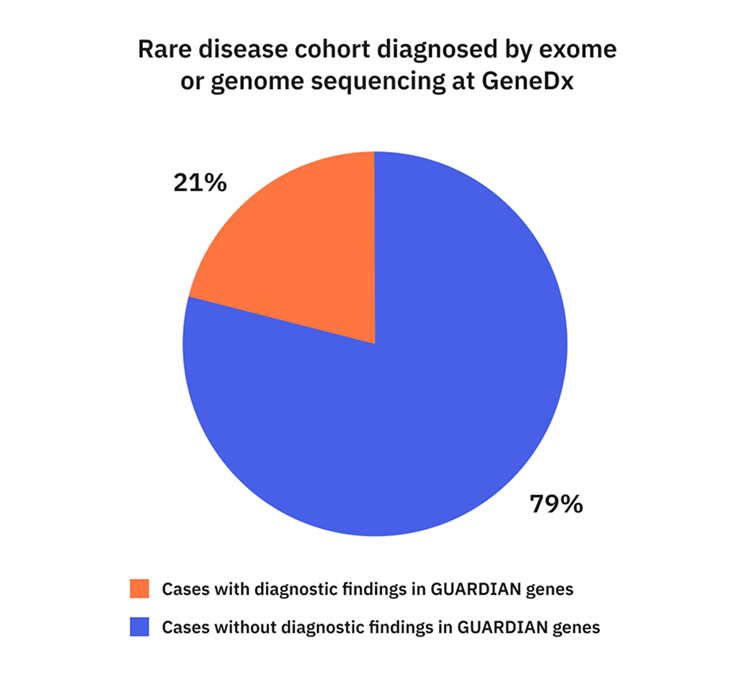
A study presented at the 2024 International Consortium on Newborn Sequencing analyzed how many GeneDx patients could have had a diagnosis at birth had they received genomic newborn screening,5 rather than getting exome or genome sequencing later in childhood.
The results were staggering: More than 21% of patients would have received a diagnosis right away, in many cases before they even experienced symptoms, with genomic newborn screening. On average, patients would have had answers a full 8 years sooner.5
Paving the way for genome sequencing in conjunction with newborn screening
- More than 15,000 newborns have received genomic newborn screening as a result of GeneDx’s efforts in this space.6 That’s more than any other commercial laboratory. This experience gives GeneDx a deep understanding of how to offer this new testing at scale for babies born at hospitals across the United States.
- At GeneDx, we’re building a world where any genetic disorder is diagnosed quickly to prevent disease progression and ensure healthy lives for all.

Interested in updates?
We’re excited to start the conversation with you. Sign up here and we’ll be in touch soon.