Key Takeaways
- Some children diagnosed with cerebral palsy may have an underlying genetic condition.
- Exome sequencing can identify genetic causes of developmental delays and neurological symptoms.
- A genetic diagnosis can reveal additional health risks and guide preventive care.
- For Evelyn and her family, genetic testing prevented permanent nerve damage and potential vision loss.
When Early Signs Didn’t Add Up
When Ashley was pregnant with her second child, Evelyn, the pregnancy was more complicated than her first.
The baby was measuring small, so Ashley had weekly ultrasounds. When Evelyn was born, Ashley required a C-section. Shortly after delivery, Ashley noticed Evelyn’s head seemed unusually small.
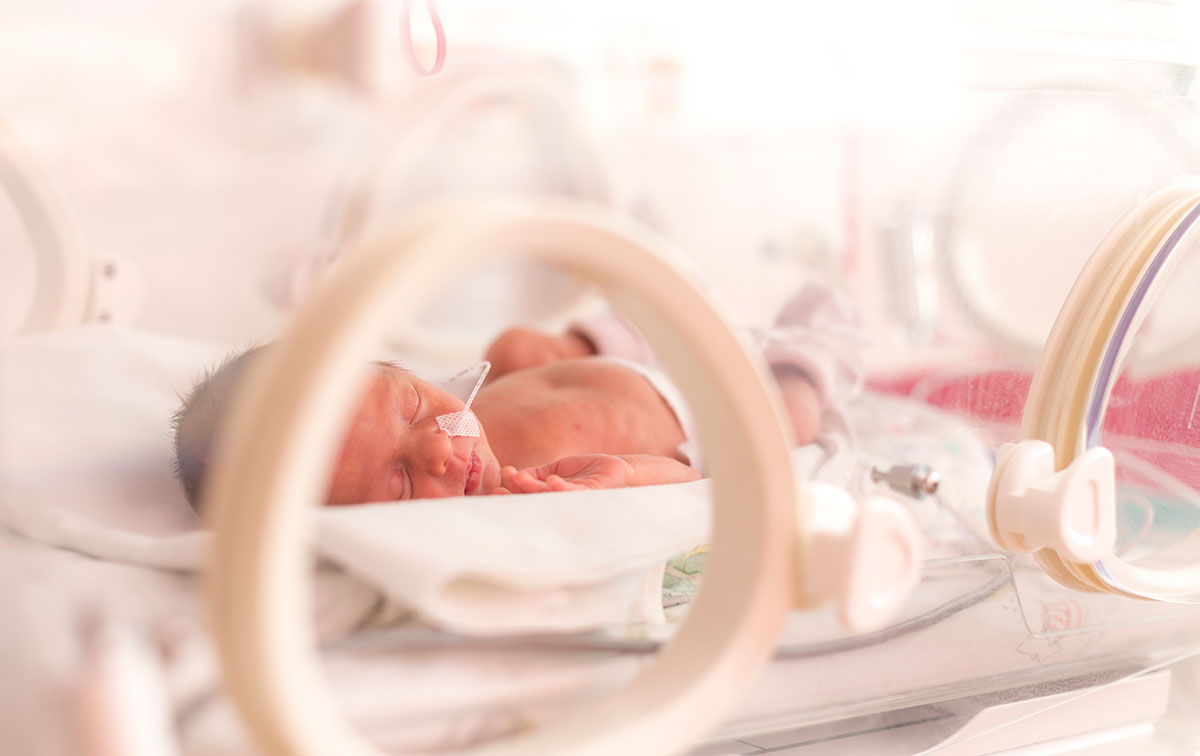
“Then when they came to do the newborn assessment at midnight, the nurse noticed Evelyn’s color was off,” Ashley recalls. “They measured her oxygen and it was down in the 70s, so they transferred her to the NICU.”
Doctors ran multiple tests, but after a few days Evelyn was discharged without clear answers.
Missing Milestones
By two months old, Ashley began noticing developmental concerns.
Evelyn wasn’t rolling over and struggled to gain weight. One of her arms appeared stiff and straight, and she could not hold a bottle.
“I felt like she wasn’t on the right path,” Ashley says. “That’s when my husband Brad and I began digging for answers.”
Evelyn’s physiatrist, a physician specializing in physical medicine and rehabilitation, suggested that Evelyn likely had cerebral palsy.
When Ashley asked the neurologist, he was less certain. Cerebral palsy is rarely diagnosed that early.
Still, the physiatrist insisted the diagnosis was clear.
When Ashley mentioned genetic testing, she remembers the response vividly:
“No, Evelyn has CP and that’s all she has. You’re wasting your time and money on genetic testing. She is 100% textbook CP.”
Ashley didn’t agree.
Trusting a Mother’s Instinct
Ashley believed Evelyn’s symptoms began before birth.
“I always thought cerebral palsy was caused by lack of oxygen during delivery,” Ashley explains. “But Evelyn had issues before she was born.”
Her umbilical cord had only one artery instead of two. She was also diagnosed with microcephaly, meaning her head was smaller than expected.
“All of this happened before the birth,” Ashley says. “So how could oxygen loss during delivery explain everything? It didn’t make sense.”
Ashley decided to pursue genetic testing anyway.
At the time, she didn’t know that up to one-third of cerebral palsy diagnoses may have a genetic cause.
A Year Wait for a Geneticist—or a Four-Hour Drive
Ashley and her family live in Knoxville, Tennessee, where only one geneticist practices locally. The wait to see him was nearly a year.
Instead, the family chose to drive four hours each way to see another specialist sooner.
The first test was a gene panel, which came back negative.
Evelyn was just over a year old when they finally met with a geneticist who ordered whole exome sequencing through GeneDx.
“He told us it was unlikely to find anything,” Ashley recalls. “But we did it anyway.”
This time, the test revealed the answer.
Evelyn had a variant in the CTNNB1 gene, confirming a rare condition known as CTNNB1 syndrome.
Why Exome Sequencing Can Make a Difference
Not all genetic tests are the same.
Panel tests evaluate a limited number of genes. While useful in some situations, they may miss diagnoses caused by genes not included in the panel.
Exome sequencing analyzes approximately 20,000 genes at once, including many genes known to cause neurological and developmental conditions.
Because cerebral palsy can result from many different genetic causes, broader testing like exome sequencing can significantly improve the chances of finding an answer.
Getting a Diagnosis—and Understanding the Future
Ashley remembers the moment the geneticist called with Evelyn’s diagnosis.
“The first thing she mentioned was a CTNNB1 parent Facebook group,” Ashley says.
Before she even hung up the phone, Ashley began researching the condition.
She learned that CTNNB1 syndrome varies widely from child to child.
Some children can walk independently.
Some use wheelchairs.
Some can speak; others are nonverbal.
At the time, only about 200 individuals worldwide had been diagnosed with CTNNB1 syndrome. Today, experts estimate the number may be closer to 500 or more, though many cases likely remain undiagnosed.
Through online support groups, Ashley also learned about two serious complications associated with the condition:
- tethered spinal cord
- retinal detachment that can lead to blindness
Another family’s journey with CTNNB1 syndrome is shared in Savannah’s story, where exome sequencing also revealed the genetic cause behind a cerebral palsy diagnosis.
When Parents Become the Experts
Because CTNNB1 syndrome is so rare, Ashley quickly realized that families often become experts themselves.
After hearing from other parents about tethered spinal cords, Ashley asked doctors to perform a spinal MRI.
The scan confirmed the condition.
Evelyn needed surgery.
“It was clear as day,” Ashley says. “Before surgery, every time I picked her up she would cry. Her body was so stiff. We thought it was muscle tone—but it was actually her spine causing pain.”
The surgery prevented permanent nerve damage and relieved Evelyn’s pain.
Protecting Evelyn’s Vision
The support group also raised concerns about another complication: familial exudative vitreoretinopathy (FEVR), a retinal disorder that can cause blindness.
Ashley asked Evelyn’s ophthalmologist about the risk.
“At first she said there was no literature connecting CTNNB1 to retinal detachment,” Ashley recalls.
Ashley pushed for a referral anyway.
Because there were no retinal specialists nearby, the family drove three hours to see one.
Fortunately, the specialist had already treated another patient with CTNNB1 syndrome and understood the condition.
Now Evelyn is regularly screened for retinal complications.
Ashley believes the genetic diagnosis made all the difference.
“I cannot imagine Evelyn not having that diagnosis and losing her eyesight,” she says.
Life Today
Today Evelyn is six years old.
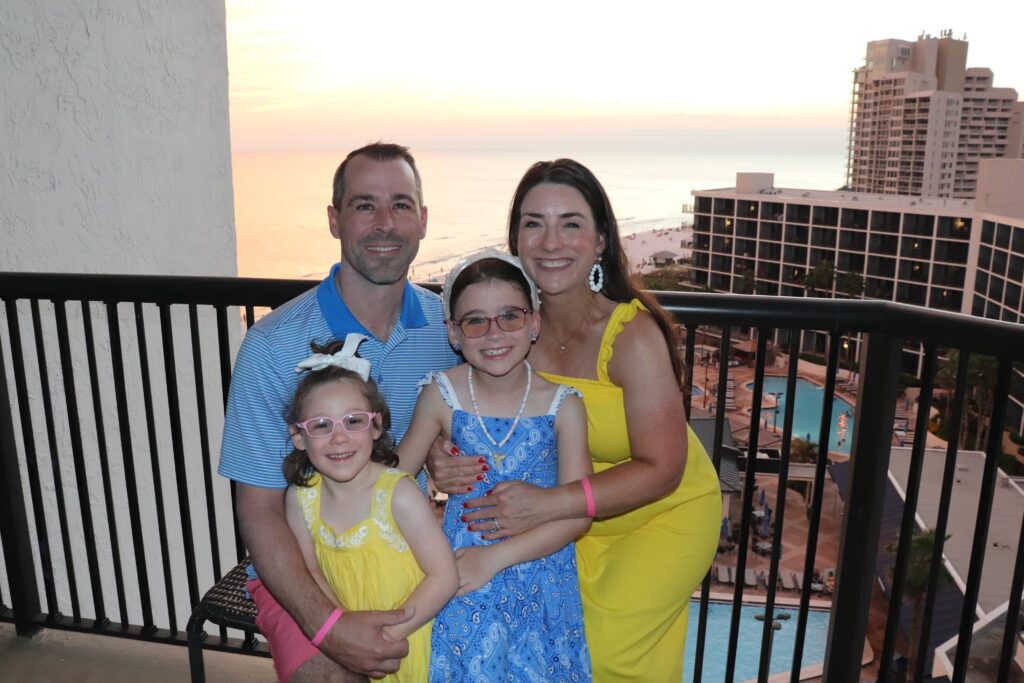
She is a kind, social child who loves being around people—especially her older sister Grace.
Her laugh is contagious.
Evelyn is learning sign language and enjoys kindergarten. She loves reading and exploring new experiences.
In occupational therapy she even rides a horse.
Ashley says the attention and care Evelyn receives from therapists and teachers has helped her thrive.
A Diagnosis That Changed Everything
Ashley often reflects on how different Evelyn’s life might look today if she had accepted the initial diagnosis without asking more questions.
“If I had just accepted that my child had cerebral palsy and not pushed for answers, my non-verbal child could have gone blind.”
—Ashley, mother of a child with CTNNB1 syndrome
For families like Evelyn’s, genetic testing can change the course of care.
Why Genetic Testing Matters for Cerebral Palsy
Cerebral palsy is one of the most common motor disabilities diagnosed in children.
Yet the cause of the condition remains unknown for many families.
Research shows that:
- Up to one-third of cerebral palsy cases may have a genetic cause
- Exome sequencing can identify genetic conditions linked to developmental delay and neurological symptoms
- Early genetic diagnosis can reveal additional health risks and guide preventive care
Learn more about genetic testing for Cerebral Palsy
Symptoms That May Warrant Genetic Testing
Evelyn experienced several early signs that prompted her family to seek answers:
- delayed developmental milestones
- difficulty rolling over
- trouble feeding
- inability to hold a bottle
- crossed eyes
- stiff or straight arm
- microcephaly (small head size)
- low body weight
For children with unexplained symptoms like these, exome sequencing may help identify the underlying cause.